From Bulletin to Broadcast: A Short History of the Newsreel
Learn how newsreels combined moving images, narration and cinema schedules, and how to distinguish recorded scenes from the claims built around them.
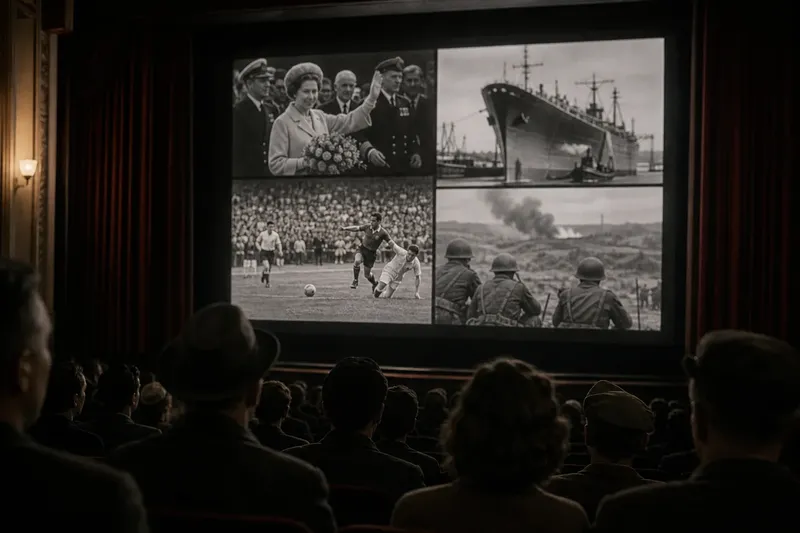
A cinema audience settles as the lights dim, and a sequence of short films begins: a public ceremony, a distant conflict, a sporting contest. In some countries and periods before television became common in homes, newsreels brought topical footage to cinema screens on a regular schedule. Their history is not simply a story of pictures replacing print. It is a story of moving images, spoken explanation and the shared occasion of a screening working together to make current events feel present.
Newsreels made topical film part of cinema programmes
A newsreel was a short programme of topical film shown in a cinema, often before the main feature. Rather than follow one event from beginning to end, an issue might gather several items: a political visit, a transport opening, a natural event or a sporting match. Audiences received a compact visual bulletin, arranged for a particular screening and repeated as new issues were prepared.
Early film technology made the format possible, while existing cinema habits gave it a place to reach audiences. Cinemas already offered people a setting in which to watch moving pictures together. A brief news programme could fit into that established setting, giving film a role beyond fiction and spectacle.
Filmed events had to be selected, assembled and distributed. A newsreel could show a recent scene, but it was not a live window onto everything happening. Its sense of immediacy depended on production and cinema schedules.
Moving images showed details without showing the whole event
Film gave audiences visible details that a printed account could only describe: a procession moving through a street, a ship entering harbour or a crowd responding to a speaker. Such images could make an event seem close, especially to viewers with no direct access to the place shown. But a camera recorded only what stood before its lens, from the position chosen by the crew.
A shot of officials greeting one another might establish that a meeting took place, but it could not by itself explain what was decided or who was absent. Editing shaped the account too: someone chose which moments to retain, how long to show them and what to place beside them.
When reading a newsreel, ask not only “What can I see?” but also “What falls outside the frame?”
Narration connected visible action to a public account
Many newsreels used spoken commentary to identify people and places, explain a scene and guide viewers through a sequence. A narrator could connect images filmed at different times or locations, turning separate shots into an intelligible report. Music and sound effects could add pace or mood, while titles supplied names and other information.
Sound did not make images self-explanatory. A confident voice could make a sequence feel authoritative, but its words still reflected choices about emphasis and interpretation. If commentary described a crowd as welcoming, for instance, that was a claim about the meaning of visible gestures, not a fact established by the image alone.
Imagine a newsreel item about a newly opened bridge. It begins with the structure, then shows a ribbon-cutting and people crossing it; narration identifies the town and says the route is open. Viewers can see the ceremony and crossing, while the commentary supplies the location and the claim about access. Keeping these sources of information distinct helps clarify what the film shows and what it says.
Cinema schedules made news a shared occasion
A newsreel audience encountered a programme at a time set by the cinema, rather than choosing when to read each item. The screening gave the programme a particular rhythm: viewers watched a curated sequence, often in the same room, before moving on to the feature or leaving. The schedule shaped when news arrived and how long each item held attention.
That shared setting could make an event feel collective. People reacted in the moment, and some encountered the images while attending for entertainment rather than specifically to follow the news. But a screening was not a conversation among all viewers: editors and exhibitors controlled what appeared and in what order.
For educators, the distinction is between access and agency. An audience might see striking images while having little control over their selection, timing or accompanying explanation.
What can a newsreel tell viewers, and what can it leave out?
How did a newsreel differ from a newspaper?
A newspaper offered written accounts that readers could revisit at their own pace, while a newsreel presented edited moving images in a cinema programme. The forms could cover similar events, but film’s visuals, narration and screening schedule created a different experience.
Did newsreels show events as they happened?
They showed filmed scenes, not necessarily events in real time. Shooting, editing and distribution took time, so an item could be topical without being live or complete.
Why did newsreels use narration?
Commentary helped identify scenes, supply context and link shots into a coherent account. It also guided interpretation, so viewers should distinguish what the camera records from what the narrator says it means.
What can a surviving newsreel tell us?
It can provide evidence of recorded scenes, contemporary presentation styles and the kinds of events selected for a programme. On its own, it cannot establish everything that happened around those scenes or how every viewer understood them.
Newsreel habits remain visible in audiovisual reporting
Newsreels belong to particular histories of cinema-going, but their arrangement remains recognisable: selected images, explanatory words and an order that steers attention. Later forms of audiovisual news changed the setting and means of delivery, while the editorial questions persisted. Which footage is included? What does the voice-over add? What impression does the sequence create?
In a classroom, students can note visible action, spoken claims and the order of shots separately, then ask what further information would help check the account. This method treats a film both as a record of what was captured and as a crafted presentation of current events.
The history of the newsreel shows how a news format takes shape through its medium and its habits of use. When watching audiovisual reporting, distinguish the image from the explanation around it: a vivid scene can bring an event near, but framing and narration still shape which version reaches the audience.